Dive into the fascinating world of non-binary identities with a look at social acceptance, exploring the challenges and triumphs of individuals who break traditional gender norms. Get ready for a rollercoaster of insights and revelations that will challenge your perceptions!
As we unravel the complexities surrounding non-binary identities, prepare to be enlightened by the diverse experiences and perspectives that shape our understanding of gender and acceptance in modern society.
Social Acceptance of Non-Binary Identities
Non-binary identities refer to gender identities that do not fit within the traditional binary of male and female. People who identify as non-binary may experience their gender as fluid, a combination of both male and female, or outside of the gender spectrum altogether.
Examples of Non-Binary Identities around the World
- In Thailand, individuals known as “kathoey” are considered a third gender, combining male and female characteristics.
- The Indigenous cultures of North America recognize Two-Spirit people who embody both masculine and feminine qualities.
- In India, the Hijra community includes individuals who do not conform to traditional male or female roles.
Statistics on Social Acceptance of Non-Binary Individuals
Research shows that acceptance of non-binary individuals varies widely across different cultures and regions. In some countries, there is growing awareness and support for gender diversity, while in others, discrimination and stigma persist.
Challenges Faced by Non-Binary Individuals in Seeking Social Acceptance
- Non-binary individuals often face erasure and invalidation of their identities, as society tends to view gender as strictly binary.
- Lack of legal recognition and protection for non-binary identities can lead to difficulties in accessing healthcare, employment, and other essential services.
- Misgendering and discrimination are common experiences for non-binary individuals, impacting their mental health and well-being.
Impact on Society
Acceptance of non-binary identities plays a crucial role in creating a more inclusive society where everyone feels valued and respected.
Role of Education in Promoting Social Acceptance
Educational institutions have the power to shape attitudes towards non-binary individuals by promoting diversity, inclusivity, and understanding of different gender identities.
Attitudes Towards Non-Binary Identities in Different Cultural Contexts
- In some cultures, non-binary identities have been historically accepted and even celebrated, while in others, there may be stigma and discrimination.
- It is important to recognize and respect the diversity of cultural attitudes towards gender identity.
Personal Stories on the Positive Impact of Social Acceptance
“Being accepted for who I truly am has allowed me to flourish and live authentically. It’s a feeling of liberation and empowerment that words can’t fully capture.”
“Seeing more representation and acceptance of non-binary individuals in society has given me hope for a more inclusive and understanding future.”
Gender Identity and Sexuality
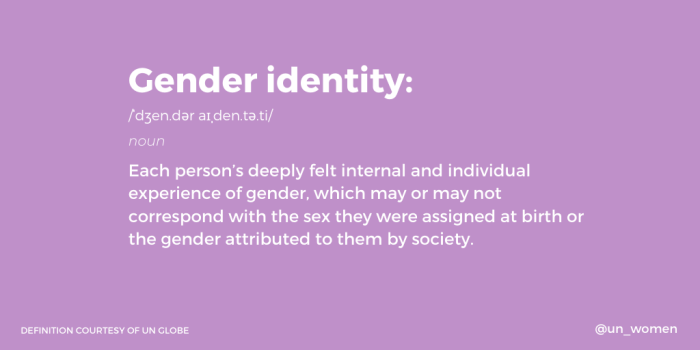
Gender identity and sexuality are often intertwined, but it’s important to understand that they are distinct aspects of a person’s identity. Gender identity refers to how an individual identifies themselves in terms of gender, whether it be male, female, both, neither, or somewhere along the spectrum. Sexuality, on the other hand, refers to a person’s sexual orientation and who they are attracted to.
Relationship Between Gender Identity and Sexuality
The relationship between gender identity and sexuality is complex and unique to each individual. While societal norms often assume that a person’s gender identity determines their sexuality, this is not always the case. Non-binary individuals, for example, may identify with a gender outside of the traditional binary categories of male and female, and their sexuality can vary widely.
- Society tends to link gender identity and sexuality, assuming that one’s gender determines who they are attracted to. However, this is a misconception that oversimplifies the complexities of human identity.
- Non-binary individuals challenge these assumptions by showing that gender identity and sexuality are separate aspects of a person’s identity.
- It’s crucial to recognize and respect the diverse ways in which individuals experience and express their gender and sexuality.
Common Misconceptions about Non-Binary Individuals
There are several common misconceptions about non-binary individuals related to their sexuality, perpetuated by societal norms and stereotypes. These misconceptions can lead to discrimination and erasure of non-binary identities.
- Assuming that non-binary individuals are confused about their gender identity and sexuality.
- Expecting non-binary individuals to conform to traditional gender roles and expectations based on their assigned sex at birth.
- Invalidating non-binary individuals’ identities and experiences by denying the validity of their gender identity and sexuality.
Challenging Traditional Notions of Sexuality
Non-binary identities challenge traditional notions of sexuality by expanding the understanding of gender and sexual orientation beyond the binary framework. This challenges society to rethink and redefine how we perceive and categorize gender and sexuality.
- Non-binary individuals may identify with multiple genders or none at all, which can influence how they experience and express their sexuality.
- By embracing and affirming non-binary identities, society can create a more inclusive and diverse understanding of gender and sexuality.
- Non-binary individuals contribute to a more nuanced understanding of human identity, highlighting the fluidity and complexity of gender and sexuality.
Society and Dating
In modern society, dating can be a complex and challenging experience, especially for non-binary individuals who may face unique obstacles due to societal norms and expectations. It is crucial to understand how these norms impact dating experiences and the importance of creating inclusive and respectful environments for non-binary people.
Impact of Societal Norms on Dating Experiences
Societal norms often dictate rigid gender roles and expectations in dating, which can be restrictive for non-binary individuals. The pressure to conform to traditional gender norms can create barriers to forming authentic connections and expressing one’s true identity.
Non-binary individuals may encounter discrimination, ignorance, or fetishization in the dating world, making it challenging to find genuine and accepting partners. It is essential to challenge these norms and promote understanding and acceptance of diverse gender identities in dating.
Importance of Inclusivity and Respect in Dating Non-Binary Individuals
- Respect non-binary individuals’ pronouns and gender identities without question or hesitation.
- Avoid making assumptions about a person’s gender identity or preferences based on appearance.
- Listen actively and empathetically to their experiences and perspectives without judgment.
- Create a safe and supportive space where they can freely express themselves without fear of discrimination or prejudice.
Tips for Creating Safe and Supportive Dating Environments
- Educate yourself about non-binary identities, pronouns, and experiences to better understand and support your non-binary partner.
- Communicate openly and honestly about boundaries, preferences, and expectations in the relationship.
- Challenge harmful stereotypes and biases within yourself and others to promote a more inclusive dating culture.
- Seek out communities, events, and resources that celebrate and affirm non-binary identities to connect with like-minded individuals.
Intersectionality of Gender Identity, Sexuality, and Dating
The intersectionality of gender identity, sexuality, and dating highlights the complexities and nuances of forming relationships in modern society. Non-binary individuals navigate their identities in relation to both their gender and sexual orientation, shaping their dating experiences in unique ways.
Understanding and acknowledging the diverse identities and experiences within the LGBTQ+ community is essential for creating a more inclusive and affirming dating landscape where non-binary individuals can thrive and find meaningful connections.
Outcome Summary
In conclusion, the journey through the landscape of non-binary identities has shed light on the importance of embracing diversity and promoting inclusivity. Let’s continue to champion acceptance and understanding for all individuals, regardless of their gender identity.
Essential Questionnaire
What is the concept of non-binary identities?
Non-binary identities exist outside the traditional male and female binary, encompassing a range of gender identities beyond these categories.
How does social acceptance impact non-binary individuals?
Social acceptance plays a crucial role in the well-being and mental health of non-binary individuals, fostering a sense of belonging and validation.
Are there common misconceptions about non-binary individuals?
Yes, common misconceptions include equating gender identity with sexuality and assuming that non-binary individuals must fit into a binary understanding of gender.
How can society create more inclusive dating environments?
Society can promote inclusivity by respecting individuals’ gender identities and preferences, creating safe spaces where non-binary people can express themselves freely.


